AI Drama Script Generator
One Sentence In,
a Shootable Script Out
Scene headers, action beats, dialogue with delivery notes, inner monologue and flashbacks — written against a season outline and formatted so the storyboard stage can shoot it without a rewrite.
Starts free, no card. You read episode one before anything is produced.
Episode script
generated from one sentence
[SC-01 | Pacific Cruise Liner — Passenger & Service Decks | night]
CAST: Lena Cai, Rourke Vane, Security Team Leader

△ Lena pauses at a porthole, tray balanced, peering out at the stern deck twenty meters ahead.
△ Through the glass: a wrapped body hits the black water with barely a splash.
△ A security guard's hand clamps onto her shoulder from behind.
△ Her tray tilts, glasses shattering against the corridor floor.
Rourke Vane: (mild, pleasant) "Unfortunately, we have a witness."
△ Lena bolts down the service corridor, footsteps pounding behind her.
Security Team Leader: (shouting) "Stop her!"
△ She bursts onto the stern open rail, ocean wind whipping her uniform.
Lena Cai: (breathless, backing against the rail) "I didn't see anything—"
Storyboard
every shot editable
- Shot 26s
Wide shot, slow push in, 24mm wide lens, static hold. Night, wind off the water. POV — this frame is what Lena Cai's eyes see; she is not in frame. Fifteen meters across the lamp-lit stern deck, Rourke Vane wearing [OUTFIT:Rourke Vane] crouches over a long sealed black tarpaulin bundle roped at both ends.
↳ from script line: “Through the glass: a wrapped body hits the black water”
- Shot 63s
Close-up, locked-off camera, eye-level, 85mm medium telephoto, slow push in. Rourke [OUTFIT:Rourke Vane]'s face fills the frame, speaking in administrative reasonableness. His slate-gray eyes remain fixed past the porthole, never looking at Lena's face.
↳ from script line: “Unfortunately, we have a witness”
- Shot 93s
Wide shot, locked-off camera, eye-level, 24mm wide lens, slow push in. Lena [OUTFIT:Lena Cai] bursts through the watertight steel door onto the stern platform, ocean wind whipping her uniform jacket. The teak planking is wet beneath her feet, steel rail gleaming under moonlight.
↳ from script line: “She bursts onto the stern open rail, ocean wind whipping her uniform”
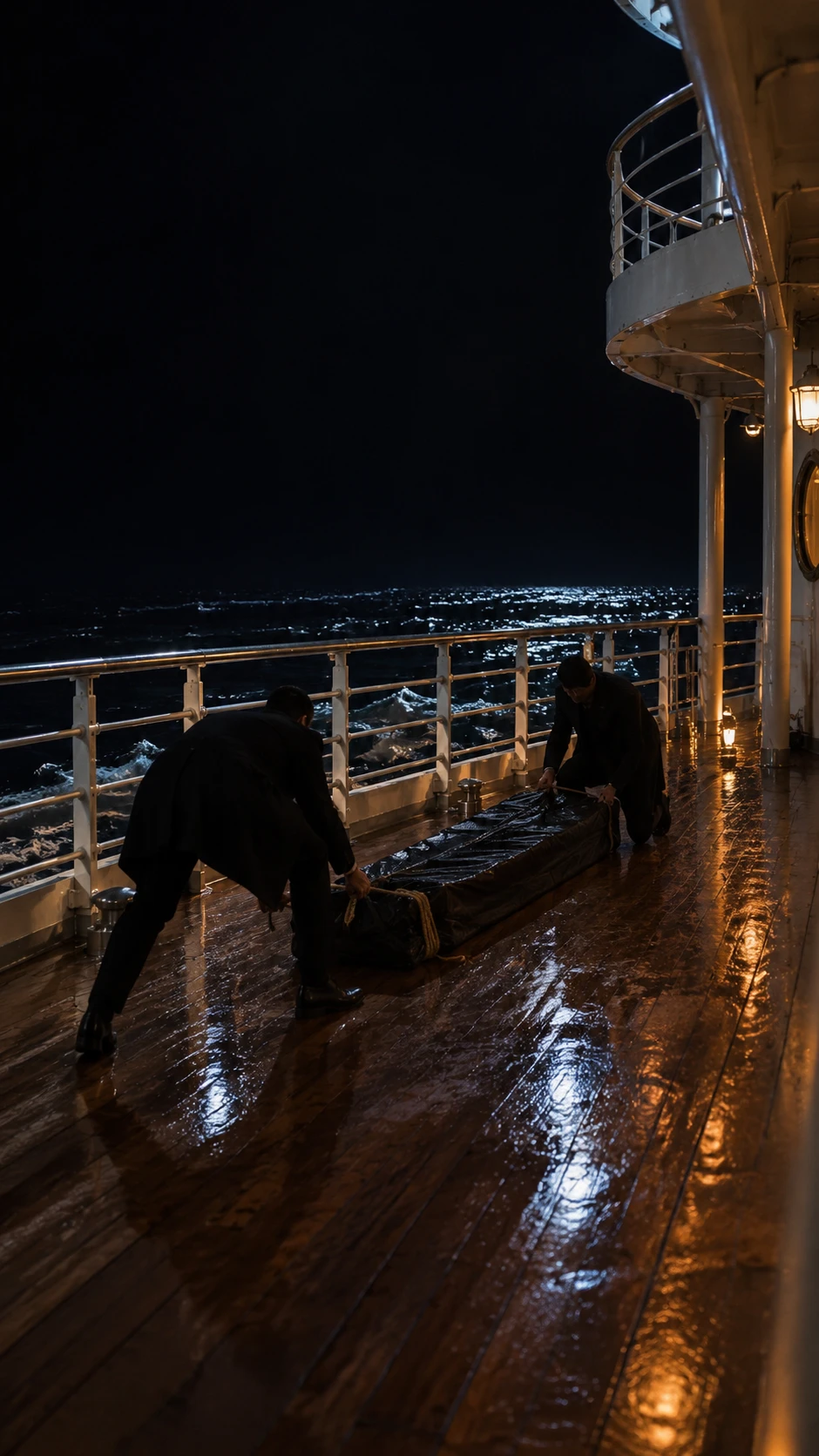
Each shot is framed as a keyframe first, so you approve what it will look like before any video credits are spent on it.
A real scene from the example series and the shots the storyboard derived from it. Each shot carries the script line it came from, so nothing is lost between writing and shooting.
The script knows who is saying the line
Dialogue is written against a cast that already exists — their station, their age, their history and what they are wearing in that scene. That is what keeps a deckhand from speaking like a lawyer, and what lets the storyboard hand each line to the right face.
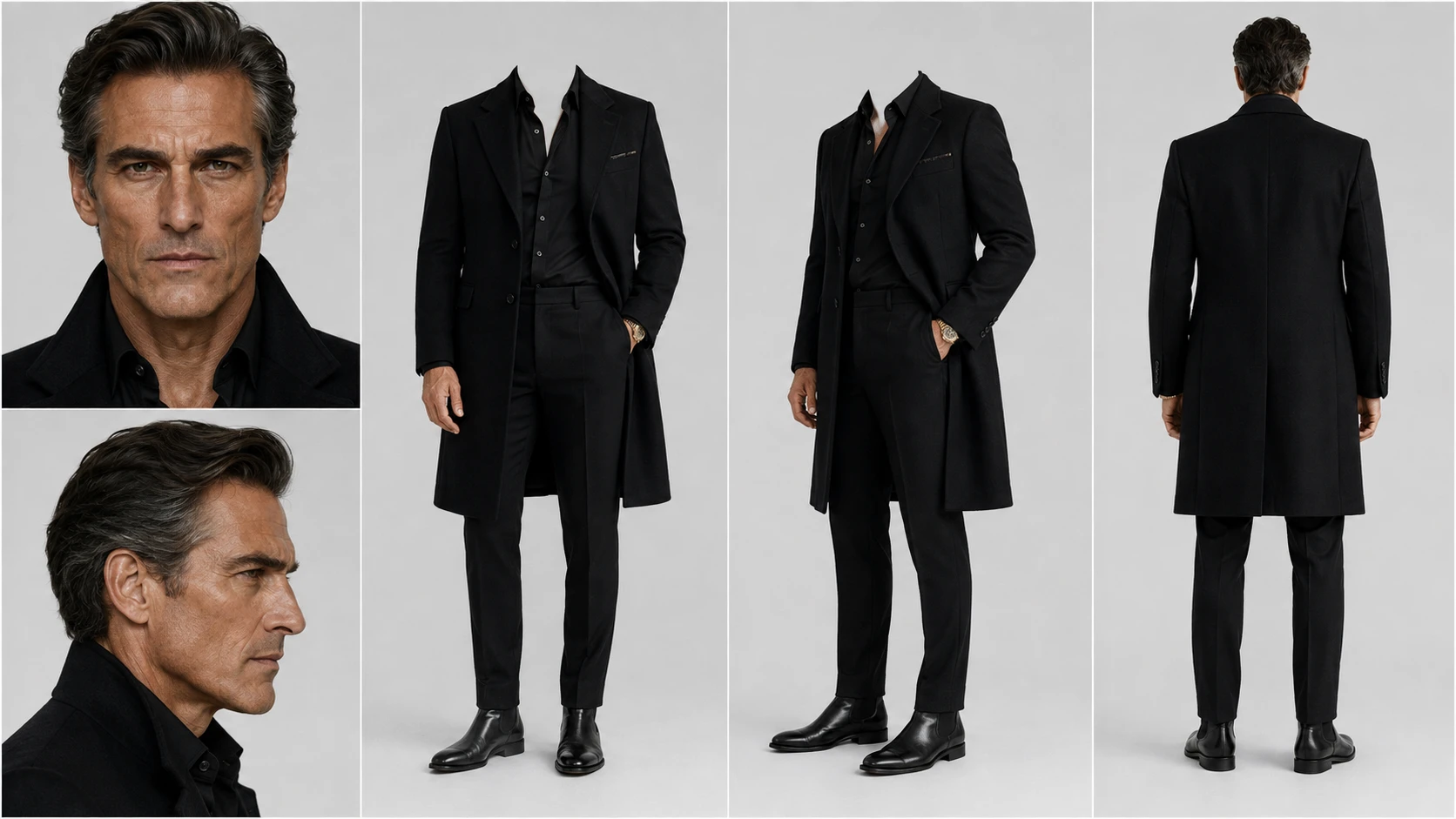
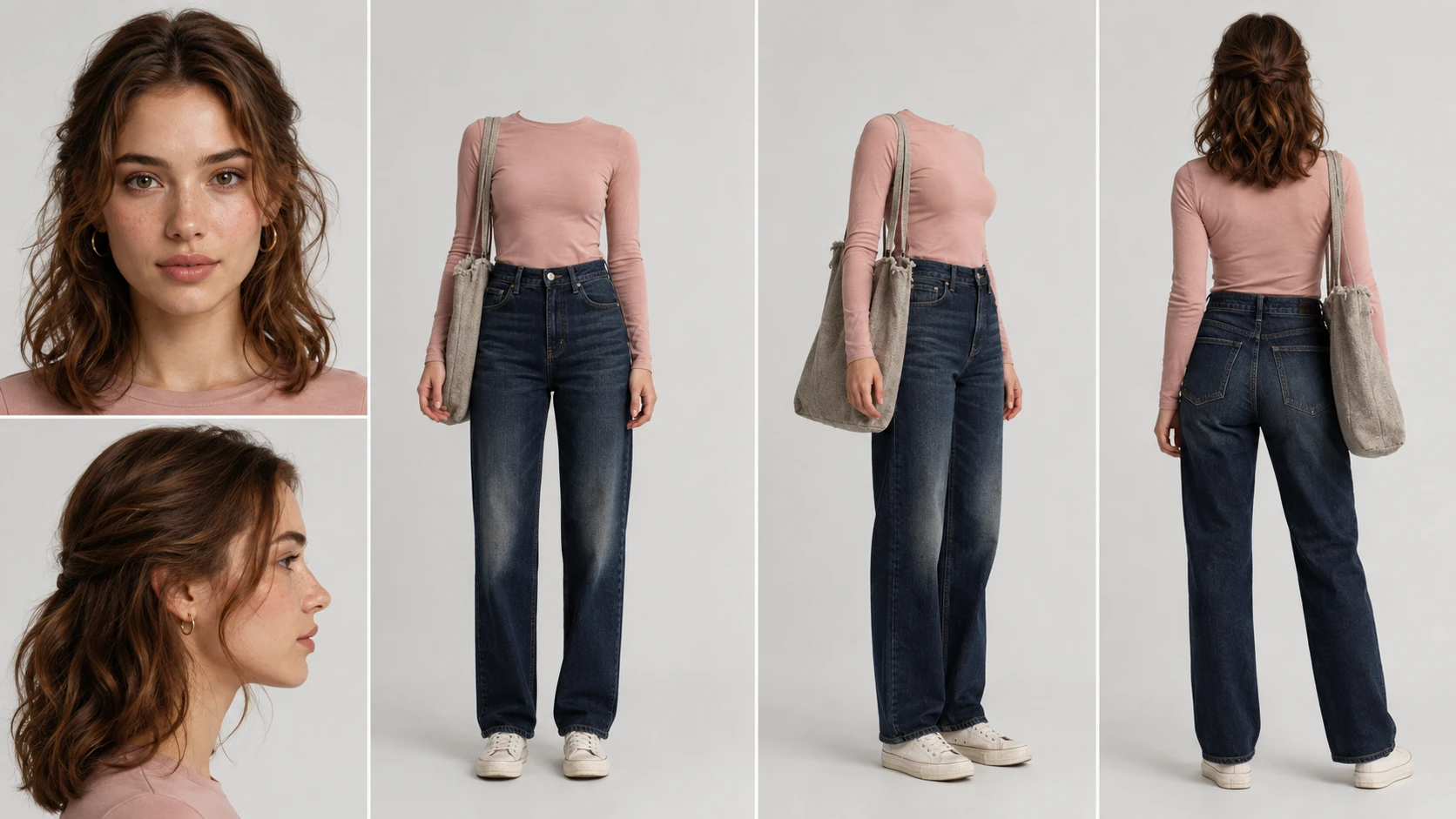
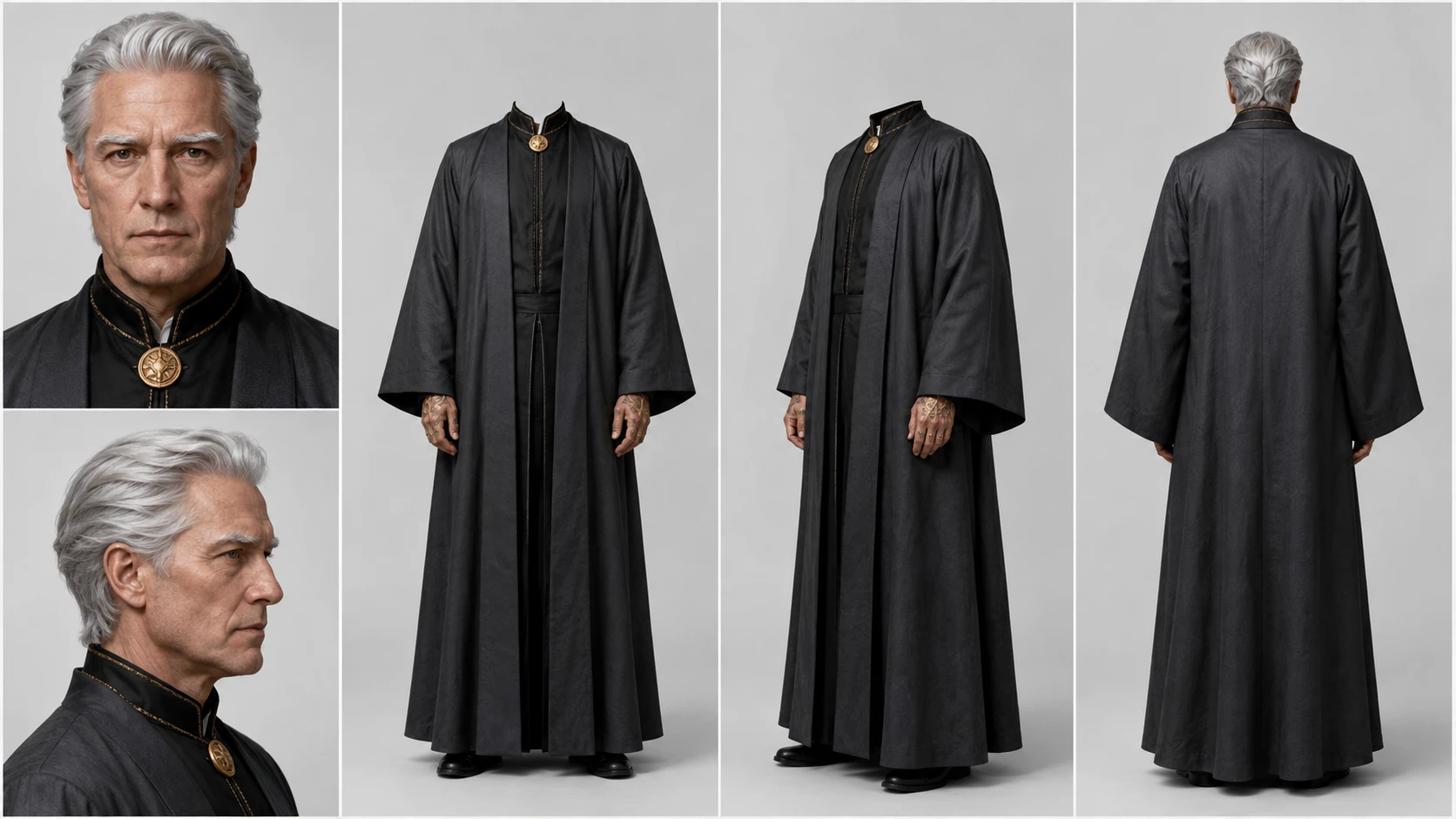
Wardrobe sheets from a series made with EaseReel — what a character is wearing in the scene is a fact the script and the shots both work from.
The format your script comes out in
Most AI writing tools hand you prose and leave the production problem to you. A drama script has to survive being turned into shots, so every line has exactly one job and a length limit. Here is what each line in the scene above is doing.
| Line | What it is | Why it is constrained |
|---|---|---|
| Scene header | Scene number, location, time of day. | Numbered without gaps. The location is taken word-for-word from the series' location list, so the art department is never guessing which room this is. |
| CAST: | Everyone physically in the scene. | Includes silent bystanders and anyone hiding. This is what stops a character appearing in a shot they were never written into. |
| △ | One action beat: one subject, one visible action, one visible result. | Capped at 40 words in English. No metaphors, no interior states — if it cannot be photographed, it does not belong on this line. |
| Name: (delivery) “line” | Dialogue with its delivery note. | The first slot in the brackets is how it is said — hoarse, mocking, half-laughing. The voice performance reads it; a stage direction would be guesswork without it. |
| OS | Inner monologue. No sound, no lip movement. | Budgeted to two lines per episode. Scarcity is deliberate — a cheap voice-over is the easiest way to kill a scene that should have been played. |
| VO | Off-screen voice with a real source: a phone, the far side of a door, a remembered line. | Also carries a delivery note, because someone actually says it. |
| [FLASHBACK]…[END FLASHBACK] | A flashback, opened and closed as a pair. | Self-contained, never nested, with its own scene header inside. Editors get an unambiguous in and out point. |
| (close-up: …) | A close-up on the object that carries the evidence, marked inline at the end of an action beat. | Key information is delivered by the object; the dialogue only has to carry the reaction. |
| [CAPTION: …] / [EMPTY: …] | A subtitle card, and an establishing shot with nobody in it. | These marks are language-neutral and stay in their fixed form in every production language — only the content inside them changes — so the composition stage recognises them without guessing, and a screenplay never reads as two languages mixed together. |
A script is only half the job
When you want to see it on screen, the script you just read is the input — you do not start over.
- 1
Shots
Every scene becomes a set of shots, each with a camera move, a performance note and its lines.
- 2
Check
Each shot is checked back against the script line it came from, so nothing silently drifts.
- 3
Episode
Shots are produced, then composed into a subtitled episode you can download.
See how the whole pipeline fits together on the AI drama generator page.
Explore More
Make the Whole Series
Outline, cast, storyboard, episodes
Plan a Multi-Episode Web Series
12, 24 or 60 episodes in one outline
Write a One-Off Short Film
A single piece instead of a season
Which Tool Fits Your Idea
Where the script stage sits in the rest
What Shooting It Costs
Priced after you have read the script