AI Drama Generator
Every Stage of an AI Drama
In One Workspace
Six steps from a conversation to a finished, subtitled vertical episode — each one a single click. Easer does the work in the background and hands it back for your approval, with the same face and the same voice in every episode.
- 9:16 vertical
- Four languages
- Subtitles from your script
- No watermark
No credit card. Free credits cover your outline, your cast and your first script.
Built for creators publishing short drama to ReelShort, DramaBox, TikTok and Reels.
Inside the workspace
What one sentence turns into
Not mockups — a season outline, a storyboard shot and a cast sheet from a series made here, in the same workspace you would use.
Stage 2
A season, planned in one pass
- 01Overboard
- 02The Rules of the Seal
- 03First Lucky Break
- 04Three Wishes, One Already Wasted
- 05The Hundred-Meter Life
…48 more episodes, each with its own hook, and the paywall placed at episode 8.
Stages 6–7
Every shot, written out
△ Lena bolts down the service corridor, footsteps pounding behind her.
Rourke Vane: (mild, pleasant) “Unfortunately, we have a witness.”
Framing, lens, camera move, performance and duration — all of it editable, one shot at a time.
Stages 3–4
A cast that is cast, not prompted
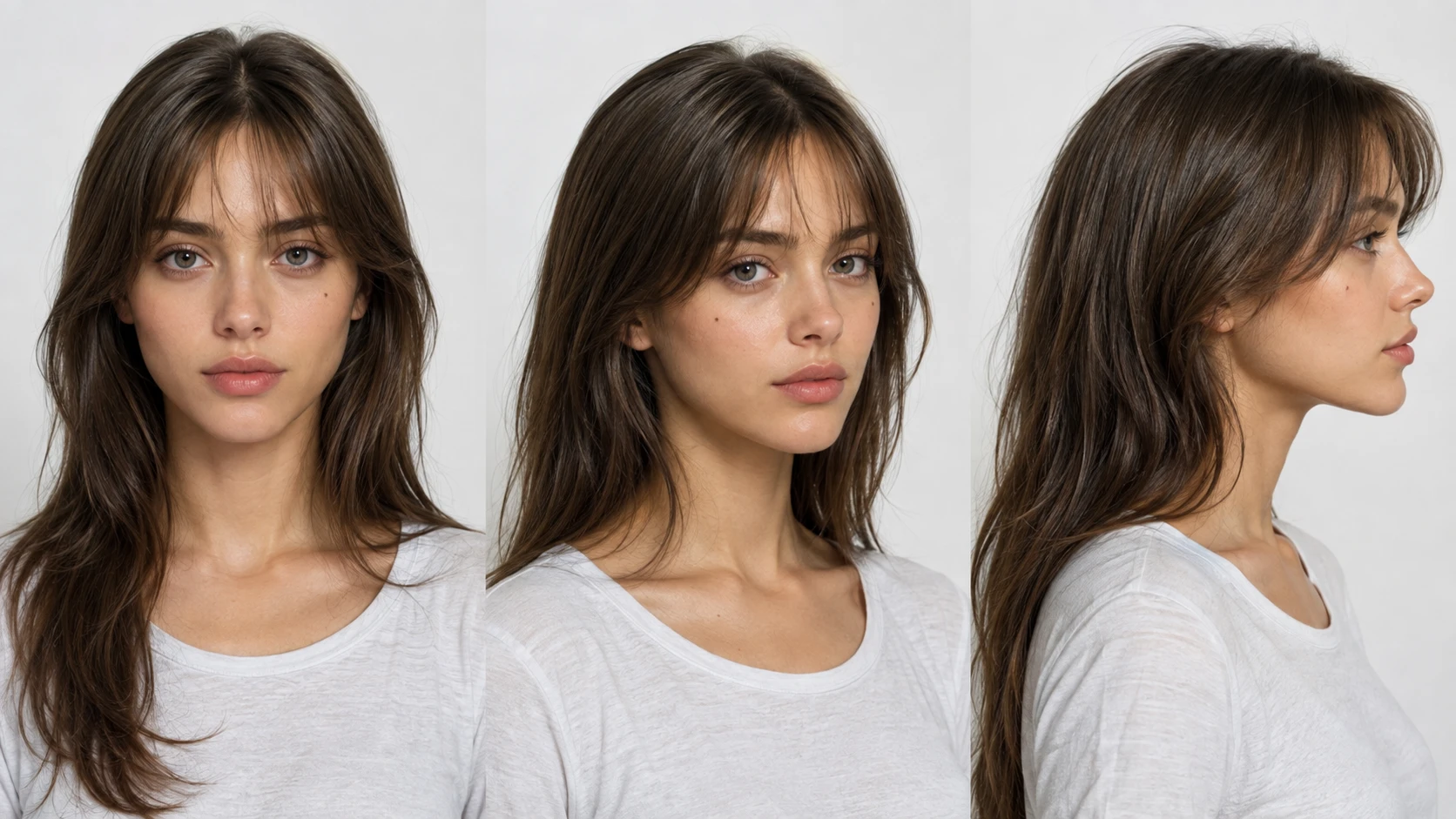
Lena Cai — one identity sheet, three angles, plus a voice taken out of the pool for the run of the series. Every episode is generated against these.
Continuity
Character and voice consistency, across the whole season
Most AI dramas fall apart by episode three — not because the shots look bad, but because the lead's face changes, her jacket changes, and someone else is doing her voice. So the cast is cast twice: once for the face, once for the voice.
The same face
A face, registered once
Each recurring character gets an identity sheet — the same face from three angles — and every shot is generated against it, instead of re-describing them in a prompt and hoping the model agrees with last week.
Wardrobe changes itself, on cue
Each character's looks are designed up front and tagged to the scenes and story beats they belong to, so the lead changes clothes when the story calls for it rather than when a prompt happens to mention it — and once she has changed, she stays changed.
Nobody wanders into frame
The script's cast line is the truth about who is present, and the storyboard cannot introduce a character who was never cast.
The same voice
One timbre per character
Named characters are matched to a library voice by gender, age and language, and no two of them can end up sharing it — the voice leaves the pool for the run of the series.
Even the extras stay put
One-off characters borrow a pool voice by a stable rule rather than at random, so re-rendering a shot does not hand the waiter a different voice than he had yesterday.
Subtitles match what you wrote
Subtitles come from your written lines rather than a transcription of the audio — and the same script can be produced in Chinese, English, Japanese or Korean, each with its own pacing rules.
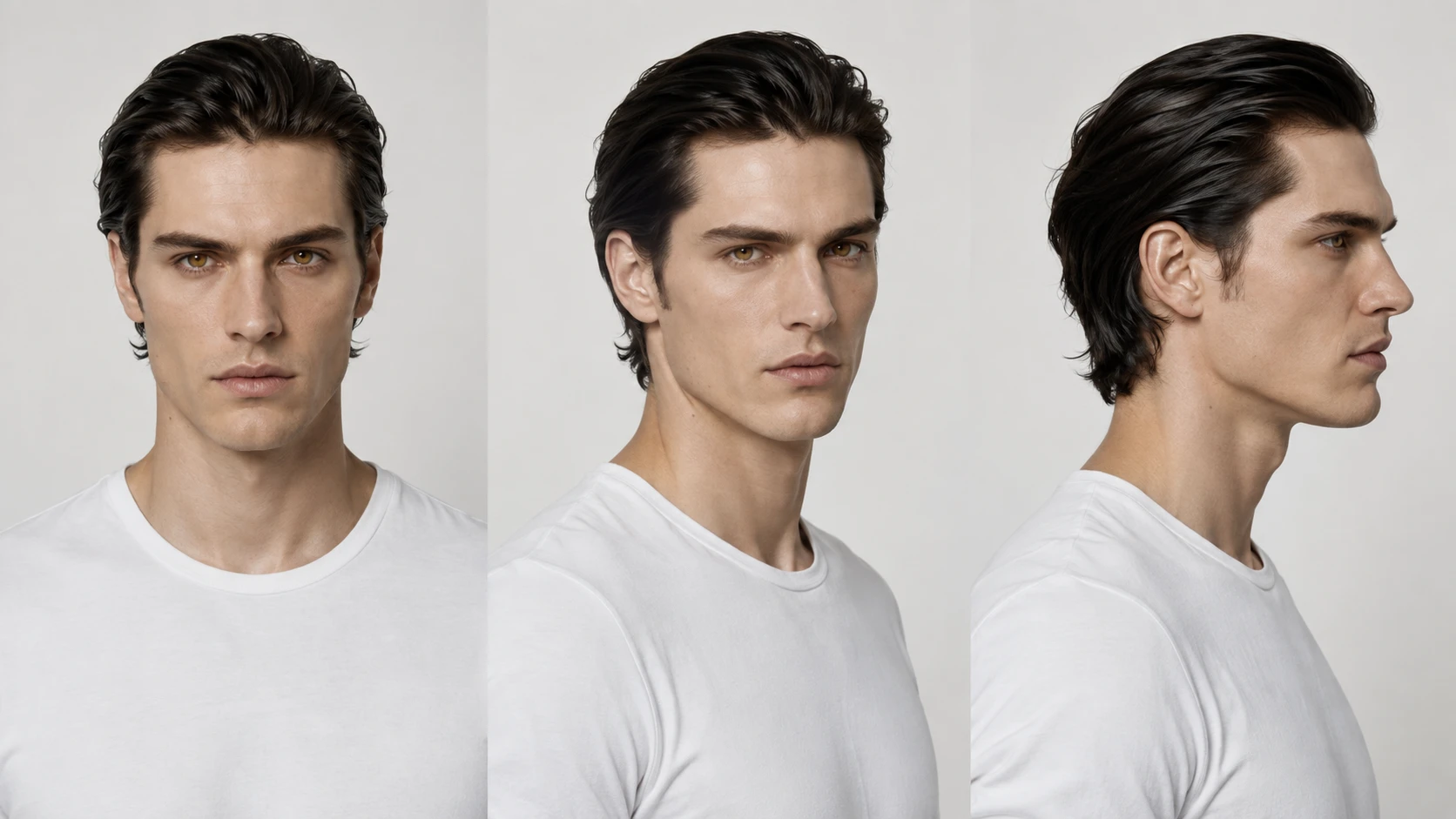
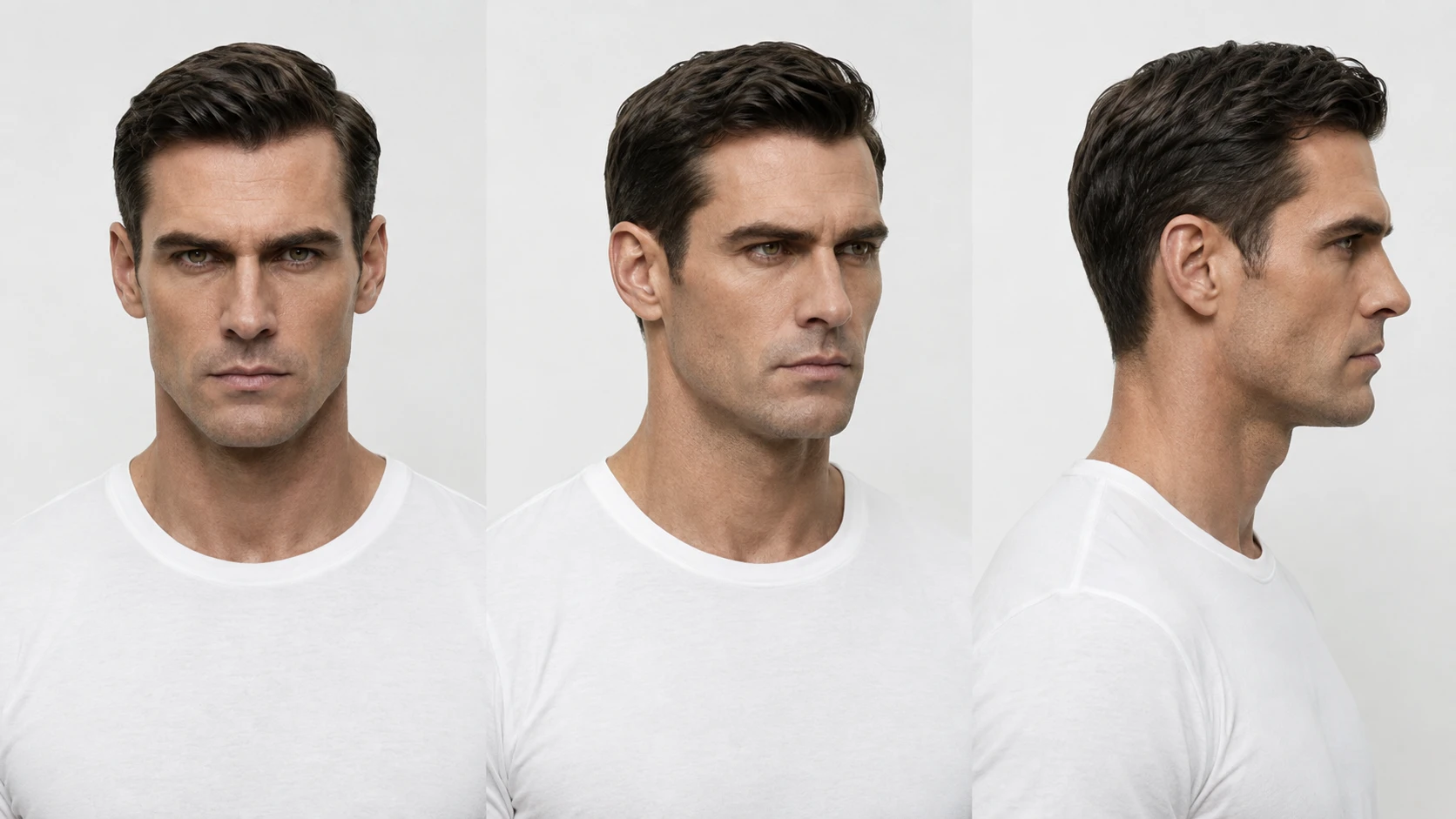
Identity sheets from a series made with EaseReel — the same face from three angles, and what every episode is generated against.
How it works
Nine stages, one click each — and you keep the last word
Behind the six steps in the hero, the workspace also builds a series bible, casts your characters, assigns their voices and designs your locations. Easer runs all of it in the background and stops at every stage.
| Stage | What you get | What stays yours to change | Cost |
|---|---|---|---|
| 1Concept | A chat that turns one sentence into a premise, a world and a cast list. | Answer differently, or overwrite any field. | 1 credit |
| 2Episodes | The whole season planned in one pass — every episode with its own hook, stakes and cliffhanger, and the paywall placed. | Rewrite any episode. | 1 credit |
| 3Screenplay | An episode written in shootable line format: action beats, dialogue with delivery notes, inner monologue. | Every line of it, in a plain text box. | 1 credit per episode |
| 4Production | One click turns the screenplay into a shot list, and designs the people, sets and props it names along the way. | Any shot, without touching its neighbours; re-design any character or location on its own. | 2 credits per episode |
| 5Voices | A library voice bound to each named character, exclusive within the series. | Reassign a character's voice at any time. | Included |
| 6Shots | Each shot produced with its audio, against the designs already approved. | Regenerate one shot; a failed job returns its credits. | 36 cr / 10s at 720p · 42 at 1080p |
| 7Compose | Shots assembled into a subtitled episode, watermark-free, ready to download. | Recut and recompose — three redos per episode. | Free |
Free credits reach the end of stage 5 — you read the season and start seeing your cast before paying for any footage. Want just one of these stages? Try the AI drama script generator or the web series generator.
Pricing
What an AI drama episode costs
A ~130-second episode runs about 500 credits on the base engine, almost all of it the footage itself. Everything before video — outline, cast, scripts, storyboard — is a fraction of that.
Who it's for
Solo creators
You have the story and no crew. This is the crew.
Novel & web-fiction authors
You already have the season. Turn a finished arc into episodes.
Studios & MCNs
You need throughput without giving up shot-level control over what ships.
Distribution teams
You need the same series in more than one language, with subtitles that hold up.
Explore more
AI drama script generator
Shootable scenes, beats and dialogue — free to try
AI web series generator
Plan 12, 24 or 60 episodes in one outline
AI short film generator
A single vertical film instead of a season
Where to publish your series
Submitting to ReelShort & DramaBox
Hire Easer to run a channel
An AI creator that posts daily for you
Make a single short video
TikTok, Shorts & Reels in one pass
Start your series today
Describe it in one sentence. Free credits get you a season outline, your first script and your storyboard — before you spend anything on video.
Start Your Series — Free